A friend told me to read Braiding Sweetgrass. She offered no reason as to why I should read it, or what it was about. She simply said this was a book that everyone should read. And she was right.
“I give daily thanks for Robin Wall Kimmerer for being a font of endless knowledge, both mental and spiritual.” —RICHARD POWERS, NEW YORK TIMES
About The Book 📚

Title: Braiding Sweetgrass: Indigenous Wisdom, Scientific Knowledge and the Teachings of Plants
Author: Robin Wall Kimmerer
Publication Date: first published 2013
Publisher: Milkweed Editions
Genre: Nonfiction, Essays
Pages: 391
Content Warnings: colonization, genocide, animal death, racism, grief, xenophobia, sexism
About The Author
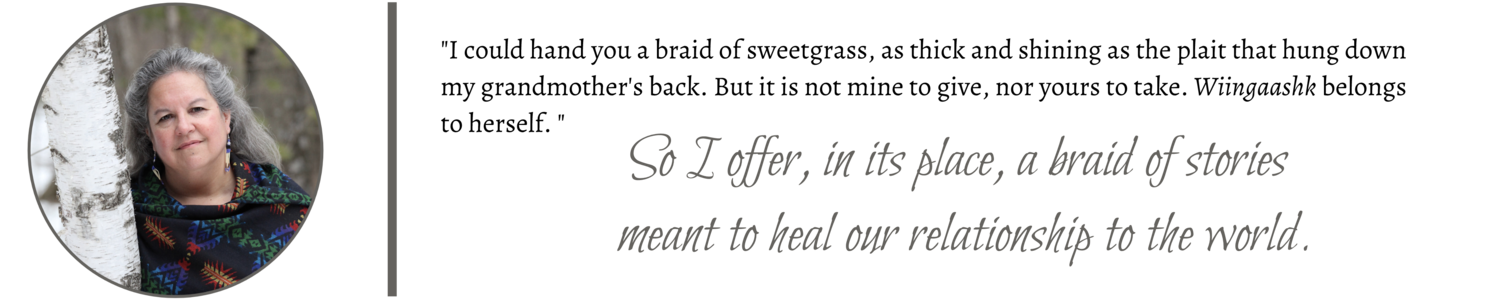
“Robin Wall Kimmerer is a mother, scientist, decorated professor, and enrolled member of the Citizen Potawatomi Nation. She is the author of Braiding Sweetgrass: Indigenous Wisdom, Scientific Knowledge and the Teachings of Plants and Gathering Moss: A Natural and Cultural History of Mosses. She lives in Syracuse, New York, where she is a SUNY Distinguished Teaching Professor of Environmental Biology, and the founder and director of the Center for Native Peoples and the Environment.” https://www.robinwallkimmerer.com/about
My Review
› Listening to the audiobook of Braiding Sweetgrass by Robin Wall Kimmerer is an incredible experience. Hearing her talk about how to care for the earth while driving down a country road with beautiful trees and plants all around is an emotional experience and I would recommend that you listen to this book while in nature, perhaps while taking a walk in the woods.
Dedication: “For all the Keepers of the Fire, my parents, my daughters, and my grandchildren yet to join us in this beautiful place.”
› Kimmerer shares poignant essays about pecans, strawberries, asters, beans, maple syrup, witch hazel, lilies, animacy, basket-weaving, harvesting, gratitude, gift-giving, sustainability and Indigenous teachings.
› “We’re told that the reason our ancestors held so tightly to these teachings was that the worldview the settlers tried to obliterate would one day be needed by all beings. Here, at the time of the Seventh Fire, in the age of the Sixth Extinction, of climate chaos, disconnection and dishonor, I think that time is now.” (from the introduction of the 2020 edition)
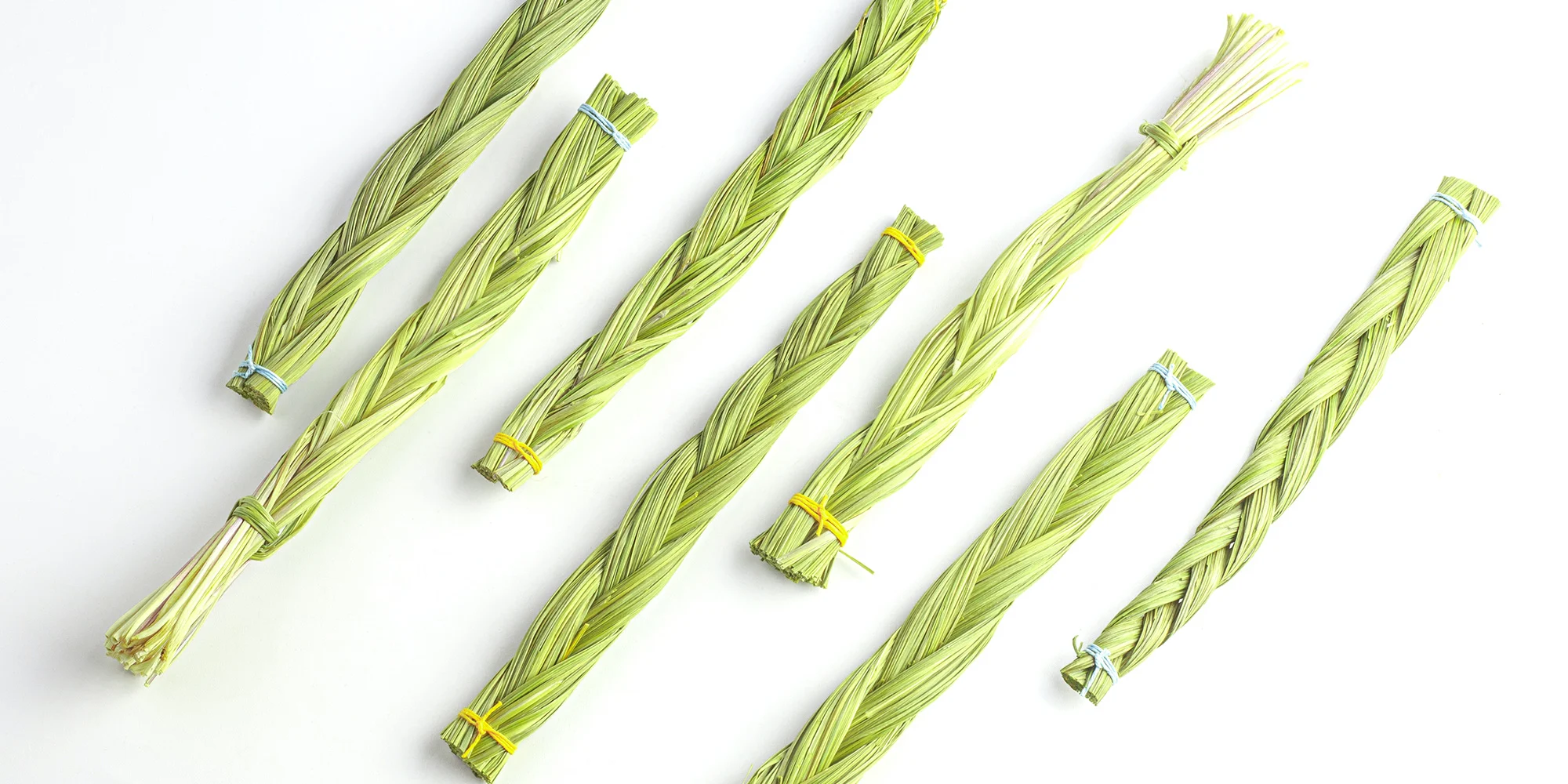
› “Hold out your hands and let me lay upon them a sheaf of freshly picked sweetgrass, loose and flowing, like newly washed hair.”

› The first thing Braiding Sweetgrass did for me was awaken a need to learn more about the plants around me. Called sweetgrass due to its vanilla scent, in many Native American languages, it is called Wiingaashk (pronunciation). A sacred plant that can purify and cleanse the air and environment, Indigenous stories say sweetgrass was the first plant to grow on earth and is the hair of Mother Earth. Braiding the sweetgrass makes it strong and it is used for smudging or sometimes hung in doorways for protection. It has historical significance and medicinal properties.
Some of my favourite quotes:
“In Potawatomi, the strawberry is ode min, the heart berry.”

“Science and art, matter and spirit, Indigenous knowledge and Western science – can they be goldenrod and asters for each other? When I am in their presence, their beauty asks me for reciprocity, to be the complementary color, to make something beautiful in response.”

“I come here to listen, to nestle in the curve of the roots in a soft hollow of pine needles, to lean my bones against the column of white pine, to turn off the voice in my head until I can hear the voices outside it: the shhh of the wind in needles, water trickling over rock, nuthatch tapping, chipmunks digging, beechnut falling, mosquito in my ear, and something more – something that is not me, for which we have no language, the wordless being of others in which we are never alone.”
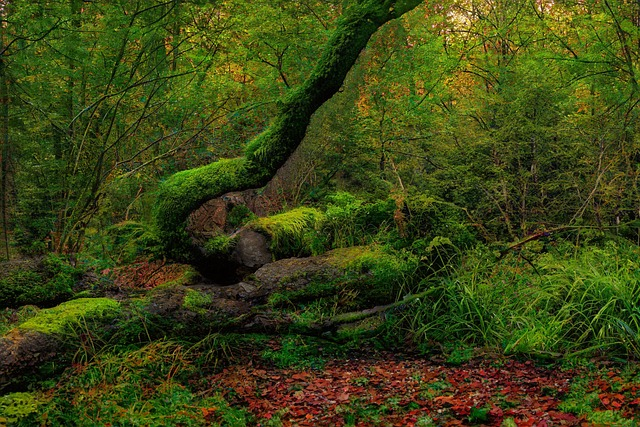
“I’m told that the Thanksgiving Address is at heart an invocation of gratitude, but it is also a material, scientific inventory of the natural world. Another name for the oration is Greetings and Thanks to the Natural World. As it goes forward, each element of the ecosystem is named in its turn, along with its function. It is a lesson in Native science.”

“The genius of the Three Sisters lies not only in the process by which they grow, but also in the complementarity of the three species on the kitchen table. They taste good together, and the Three Sisters also form a nutritional triad that can sustain a people.”

“Our elders say that we live in the time of the Seventh Fire. We are the ones the ancestors spoke of, the ones who will bend to the task of putting things back together to rekindle the flames of the sacred fire, to begin the rebirth of a nation.”

“Action on behalf of life transforms. Because the relationship between self and the world is reciprocal, it is not a question of first getting enlightened or saved and then acting. As we work to heal the earth, the earth heals us.”

“Gratitude for all the earth has given us lends us courage to turn and face the Windigo that stalks us, to refuse to participate in an economy that destroys the beloved earth to line the pockets of the greedy, to demand an economy that is aligned with life, not stacked against it. It’s easy to write that, harder to do.”

› As you can see by these quotes, Kimmerer’s writing is superior. Her voice is unique and I feel incredibly grateful that she has shared this knowledge.
› There is an edition of this book created specifically for the younger generation called Braiding Sweetgrass: For Young Adults. It was adapted by Monique Gray Smith and illustrated by Nicole Neidhardt and includes a beautiful image of the Haudenosaunee Thanksgiving Address.

› I’m no longer giving a star rating here on my blog. I will continue to do that on Goodreads and The Story Graph.
› Final Thoughts
• Indigenous people can teach how to take care of the Earth. We need to change our thinking so our interactions with the environment and its occupants are reciprocal and we need to pass on that knowledge to the next generation. Reading this book is a giant leap in the right direction. Informative, inspiring, and thought-provoking, Braiding Sweetgrass is about reciprocity, community, Indigenous wisdom, scientific knowledge, sustainability, gifts, gratitude, responsibility, motherhood, and teaching. This book changed my perception of the world around me. It is unforgettable and I think everyone should read it.
Connect With Me 😊
Twitter | Goodreads | Instagram
I acknowledge that I am on the traditional territories of the Anishinabewaki ᐊᓂᔑᓈᐯᐗᑭ, Wendake-Nionwentsïo, and Mississauga. https://native-land.ca/
Discover more from Smitten For Fiction
Subscribe to get the latest posts sent to your email.
